
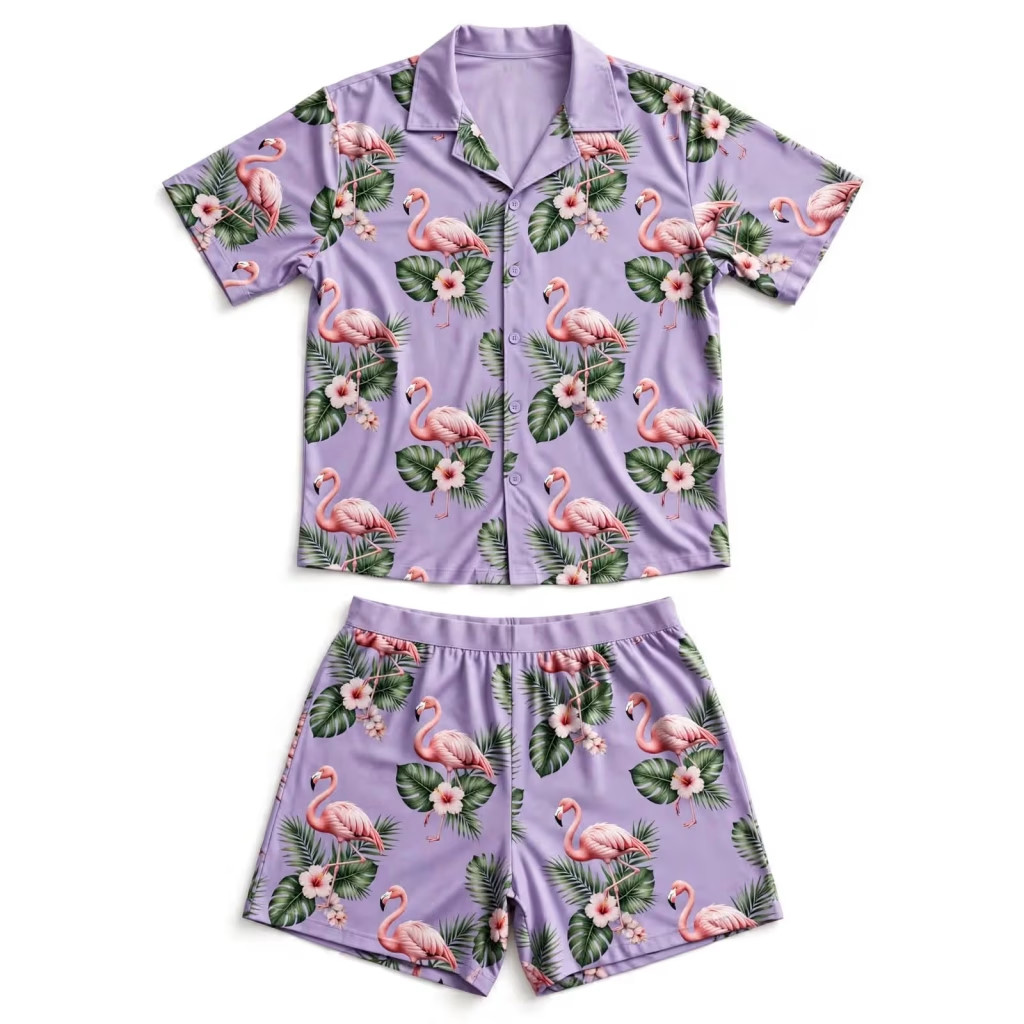
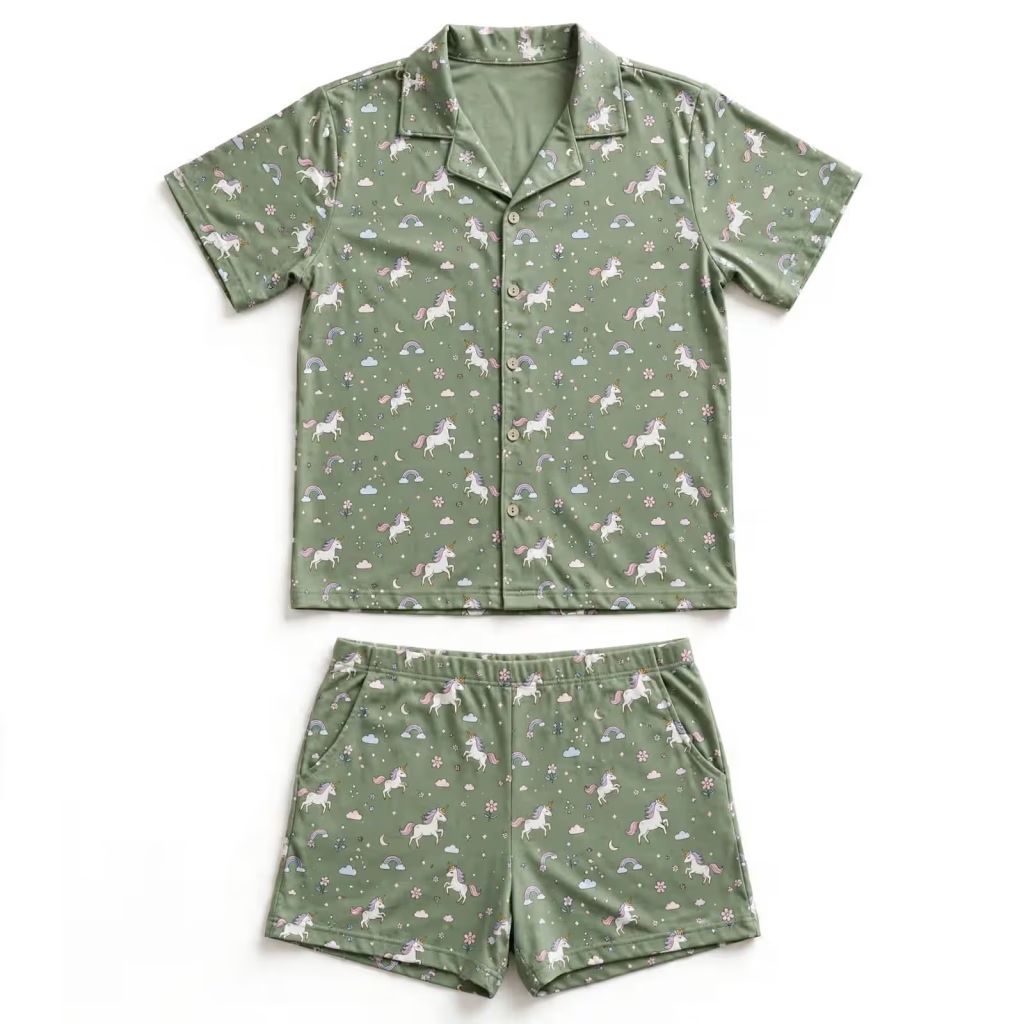
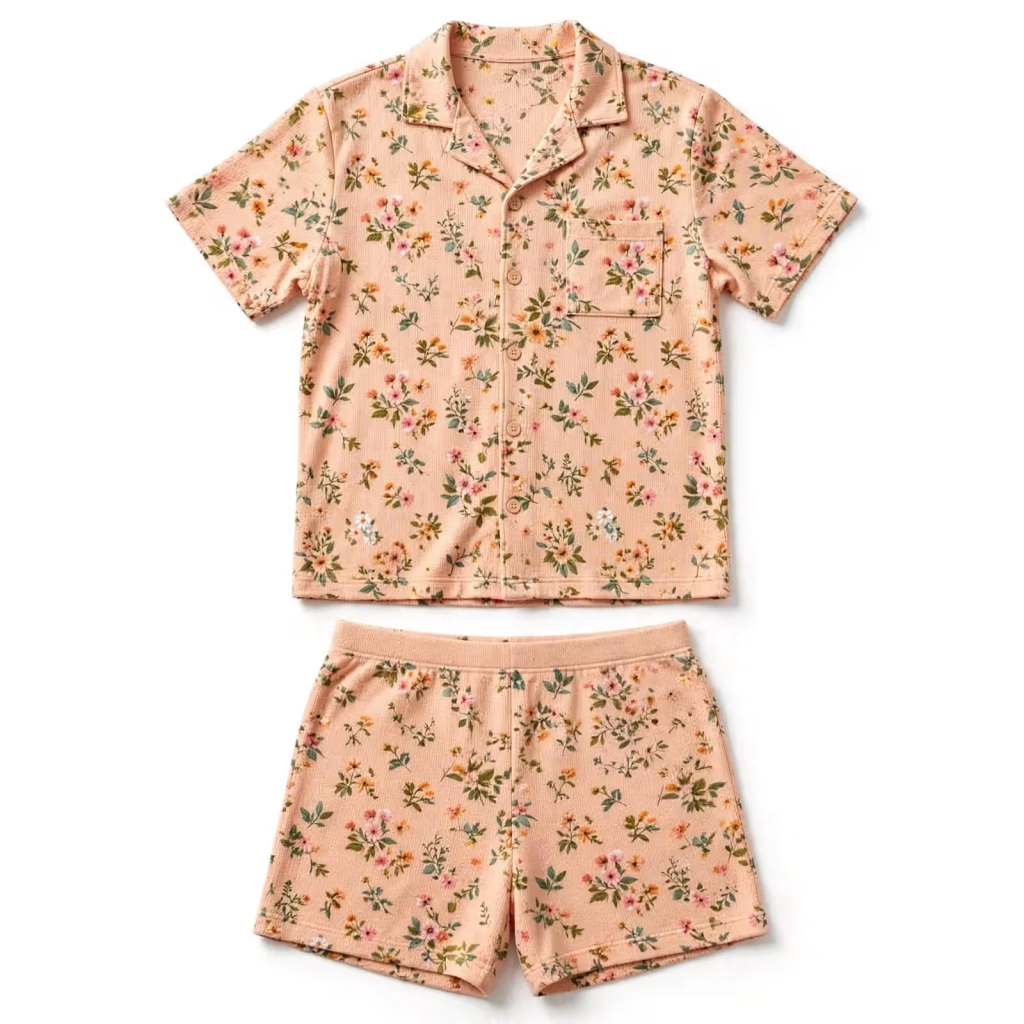
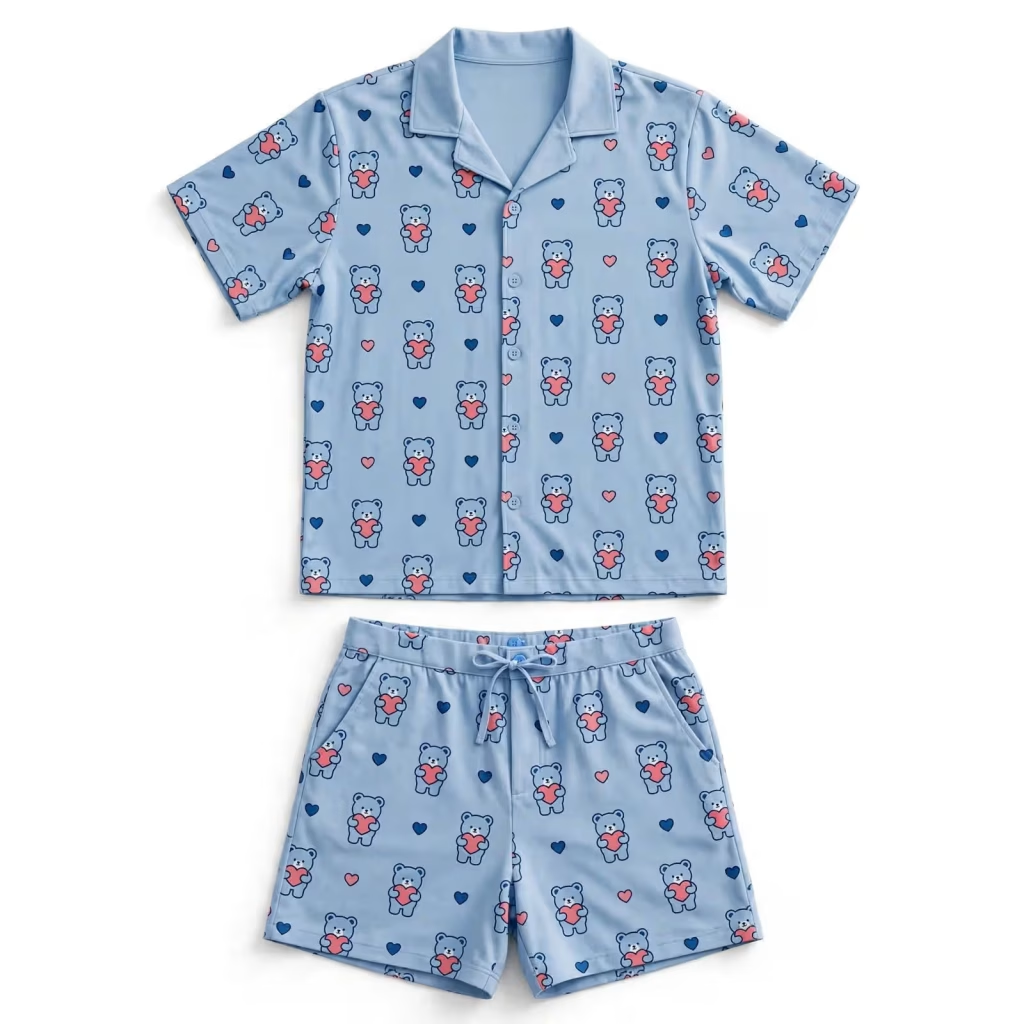

Order Custom Chemise Sets Made to Your Specifications
Custom chemise sets from an experienced manufacturer and supplier are developed around your product requirements - not from ready-made stock. Specify your fabric, fit, sizing, colors, prints, trims, labels, packaging, and quality standards. We handle development, sampling, production, and quality control for your retail collection.
✓ Made to your designs and specifications.
✓ Flexible fabric, color, print, and sizing options.
✓ Custom labels and packaging for your brand.
✓ Sample development before bulk production.
✓ Careful quality checks during production.
✓ Suitable for private-label and retail collections.
✓ Reliable support from inquiry through shipment.
Build your next chemise set collection around the details your buyers expect.
Custom Chemise Sets Developed Around Your Product Brief
A Custom Chemise Set Manufacturer in Bangladesh gives importers, wholesalers, retail chains, and sourcing agents a practical way to develop sleepwear around their own specifications. Instead of buying a generic chemise and accepting its fabric, fit, colors, trims, and packaging, you can define the product from the start. We develop custom chemise sets with buyer-specified fabrics, measurements, styling, branding, labels, and packaging.
That control becomes important when the garment needs to fit a particular customer group or retail position. A softer fabric may be required. The neckline may need changing. Strap width, body length, hem shape, or sizing may need to follow your own measurement chart.
We take those details into product development, sampling, production, quality control, finishing, and packing.
Why Buy Custom Chemise Sets Instead of Ready-Made Styles?
A factory sample can look right in a photograph and still be wrong for your collection.
Perhaps the fabric is too heavy. Maybe the body is too short. The straps may not sit correctly. The hem may lack the drape you want. Even small differences can affect how the product feels when it reaches your customer.
Custom manufacturing changes the starting point. Your product requirements come first.
This makes the service suitable for:
- Importers developing private-label sleepwear
- Wholesalers sourcing defined chemise styles
- Retail chains planning women's nightwear collections
- Sourcing agents managing apparel production for clients
- Brands that need specific fabrics, fits, colors, or trims
You can also expand the range with related custom camisole manufacturing when a collection calls for similar lightweight silhouettes.
Give Your Chemise the Right Shape
A chemise may have a simple construction, but its proportions have a direct effect on comfort and appearance.
The pattern can be developed around your required:
- Bust or chest measurement
- Underbust position
- Shoulder width
- Strap placement
- Armhole depth
- Neckline
- Body length
- Hip width
- Hem circumference
- Side seam shape
- Ease allowance
- Size range
Some buyers want a loose, flowing silhouette. Others may prefer a more shaped upper section with a relaxed lower body.
Neither approach is automatically right. The correct choice depends on your customer, fabric, price level, and intended collection.
Choose Fabrics That Support the Product
Fabric should be selected before the sample is finalized, not after.
A lightweight material can create a soft, fluid chemise. A stretch knit may provide more flexibility. A stable fabric can give the garment a different structure and appearance.
Depending on the design, suitable options may include:
- Cotton jersey
- Cotton blends
- Viscose
- Modal blends
- Stretch jersey
- Ribbed knit fabrics
- Lightweight woven fabrics
- Other buyer-approved fabric constructions
Fabric weight, composition, stretch, recovery, drape, and hand feel can all influence the finished garment.
If you already know the composition and GSM, include them in the inquiry. If not, we can review the design and intended use when discussing suitable materials.
For buyers developing broader sleepwear ranges, related custom sleepwear set production can be considered alongside the chemise program. The sitemap lists this as a related sleepwear category.
Create the Neckline Your Collection Needs
The neckline is one of the first details customers notice.
A simple scoop neckline can give a relaxed appearance. A V-neck can create a different visual line. A square neckline may suit a more structured design.
Possible directions include:
Scoop and Round Necklines
These can work well for simple everyday sleepwear and can be finished with self-fabric binding, facing, or other suitable construction.
V-Neck Chemise Sets
A V-neck can create a more defined front shape. Its depth, width, and finishing need to follow the approved pattern.
Square or Shaped Necklines
For a more distinctive collection, a shaped neckline can become an important design feature. The construction needs to work with the selected fabric and finishing method.
The objective is not to add details simply for the sake of variety. Every component should support the intended product.
Adjust Strap and Upper-Body Details
Straps have a practical job as well as a visual one.
You may want narrow straps for a lightweight style, wider straps for additional coverage, or a specific strap placement based on your fit model.
Depending on the design, the product can include:
- Narrow shoulder straps
- Wider straps
- Self-fabric straps
- Adjustable strap construction where suitable
- Contrast straps
- Decorative strap details
Strap width, armhole depth, neckline, and bust measurement should be considered together. Changing one measurement can affect the balance of the upper body.
Give the Hem the Right Finish
The lower part of a chemise strongly affects its overall look.
A straight hem creates a clean appearance. A curved hem can give the garment a softer line. A fuller lower section can provide more movement, while a narrower shape creates a closer silhouette.
Your product specification can define:
- Overall length
- Hem width
- Straight or curved hem
- Side slits
- Layered panels
- Lace or trim
- Contrast binding
- Decorative finishing
For a retailer, these choices can help create clear differences between styles without completely changing the basic product category.
Add Prints, Trims, and Decorative Details
A chemise does not have to be plain.
Depending on the product concept, you can consider:
- Placement prints
- Repeat prints
- All-over patterns
- Embroidery
- Lace
- Piping
- Contrast binding
- Ruffles
- Small bows
- Appliqué
- Decorative stitching
- Brand logos
Artwork placement should be reviewed against the pattern. A graphic near a seam can look different from one positioned on a flat panel.
Similarly, delicate trims need to be suitable for the fabric and construction. Product development should consider these details before the sample is approved.
If your collection includes more conventional two-piece sleepwear, the custom pyjama set manufacturing range offers a related product direction.
Build a Private-Label Chemise Set
Your customers should recognize your brand when they open the package.
Private-label production can include your specified:
- Main brand label
- Size label
- Care label
- Hangtag
- Printed branding
- Woven branding
- Packaging artwork
- Polybag requirements
- Carton markings
Label placement can be defined during product development so it works with the neckline, seams, and garment construction.
Packaging is handled in the same way. If your retail channel requires specific folding, bagging, labeling, or carton instructions, those requirements should be shared before production.
Start With a Design, Sample, or Tech Pack
Not every buyer arrives with a complete technical package.
That is fine.
You can begin with a design sketch, reference garment, image, measurement chart, or basic product description. If you already have a full tech pack, that gives the development team more precise information from the beginning.
Useful information includes:
- Chemise design
- Reference sample or image
- Fabric composition
- GSM
- Measurement chart
- Size range
- Quantity
- Color references
- Artwork
- Trim requirements
- Labels
- Packaging
- Destination
- Required delivery period
The more complete the specification, the easier it is to prepare a quotation that reflects the actual garment.
Sampling Lets You Check the Product Before Bulk
One question usually matters most to a buyer: Will the finished garment match the approved design?
Sampling provides an opportunity to check.
A custom chemise sample can be reviewed for fabric feel, measurements, neckline, straps, body length, hem shape, artwork, trims, labels, and overall finishing before the bulk order moves ahead.
Custom sample development generally starts after order confirmation and initial payment, with the sample fee paid upfront. A custom sample deposit of around USD 500 may be credited toward the final order depending on the agreed arrangement.
Sample development commonly takes around 2–3 weeks, depending on materials, construction, artwork, and revisions.
For startups and growing labels, this stage can be especially useful because it allows the product concept to be tested before a larger production commitment.
Fit Should Be Checked Across the Size Range
One sample size does not tell the whole story.
A chemise may fit correctly in one size and become too short, too loose, or incorrectly proportioned in another if grading is not handled properly.
That is why your size chart should be established before bulk production.
Important points may include:
- Bust
- Waist
- Hip
- Shoulder
- Strap length
- Armhole
- Body length
- Hem width
- Neck opening
If your brand already has established measurements, send them with the inquiry. If you have an existing garment that represents the desired fit, that can also help communicate the intended proportions.
Pricing Should Match the Actual Product
A unit price without a product specification can be misleading.
Custom chemise set pricing can change according to:
- Fabric composition
- Fabric weight
- Fabric consumption
- Order quantity
- Size range
- Number of colors
- Print coverage
- Embroidery
- Lace or other trims
- Construction complexity
- Labels
- Packaging
- Special finishing
A simple cotton chemise with minimal decoration will naturally have different production requirements from a detailed style using specialty fabric, multiple trims, and custom packaging.
Send the actual requirements first. Then the costing has a useful basis.
MOQ Depends on Your Fabric and Order Structure
MOQ is not identical for every custom chemise project.
The practical quantity can depend on fabric availability, color, design, order size, trims, and sourcing requirements.
Regular fabrics that are readily available may provide more flexibility. Sustainable or specially imported fabrics can require significantly higher quantities because their own purchasing minimums may be higher.
For buyers considering sustainable materials, this difference should be discussed early. A fabric choice can affect not only unit cost but also the minimum quantity required for production.
Provide your expected quantity, colors, fabric preference, and size breakdown so the production team can assess the appropriate order structure.
Production Follows the Approved Specification
Once the product is approved, manufacturing can move through the required stages.
Material Sourcing
Fabric, trims, labels, and other components are sourced according to the approved product requirements.
Pattern and Cutting
The approved measurements and pattern are used to prepare the production plan and cut the required size breakdown.
Sewing
The garment is assembled according to the approved construction. Stitching, seams, neckline, straps, and other key areas are monitored during production.
Decoration and Branding
Printing, embroidery, trims, labels, and other approved details are applied according to the product specification.
Finishing and Packing
Finished garments are checked, thread-trimmed, pressed where required, folded, labeled, and packed according to buyer instructions.
This process is intended to keep the approved sample as the practical reference for bulk production.
Quality Control Covers More Than Appearance
A chemise can look attractive and still have problems that affect the buyer's order.
Measurements, construction, fabric, artwork, labels, and packing all need attention.
Relevant checks can include:
- Fabric condition
- Shade consistency
- Garment measurements
- Neckline construction
- Strap attachment
- Seam quality
- Hem finish
- Print placement
- Embroidery
- Label position
- Loose threads
- Overall appearance
- Packing accuracy
Siatex Bangladesh works with 24+ partner certified manufacturing facilities and has combined production capacity of up to 900,000 pieces per month across mixed knit and woven garment production.
Third-party inspection can also be arranged through companies such as SGS, Bureau Veritas, Intertek, or Qima when required. The buyer normally pays the third-party inspection cost.
Compliance Information for Your Sourcing Process
Supplier evaluation can involve social compliance, audits, and material requirements in addition to garment quality.
Depending on the facility and order, the manufacturing network includes facilities associated with standards or certifications such as:
- BSCI
- SEDEX
- WRAP
- OEKO-TEX for applicable materials or products
Certification and audit status should be checked against the specific facility, material, and order. It should not be assumed that every certification applies to every production arrangement.
If your buying program requires particular testing, labeling, restricted-substance controls, social compliance documents, or packaging standards, share those requirements before production.
Plan Production Around Your Delivery Window
Timing should be discussed before the order reaches the production floor.
Bulk production is generally around 4–8 weeks from PP approval, depending on quantity, material availability, construction complexity, approvals, and production scheduling.
Sample development takes additional time.
For a seasonal collection, it is therefore sensible to allow time for:
- Product review
- Costing
- Material sourcing
- Sample development
- Sample revisions
- PP approval
- Bulk production
- Final inspection
- Packing and shipment preparation
A clear delivery target at the beginning helps the production team understand the buying schedule.
Develop a Complete Sleepwear Collection
A chemise can become one piece of a larger assortment.
A retailer may combine it with two-piece sleep sets, nightdresses, camisole styles, robes, or lounge products. Using related fabrics, colors, artwork, or branding can make the range feel more coordinated.
The sitemap also includes related custom nightwear set manufacturing and custom nightdress set manufacturing categories for buyers planning a wider sleepwear collection.
This approach can be useful when a retail buyer wants several sleepwear silhouettes rather than relying on one product type.
Serving Different Buying Markets
The product brief should reflect the customers who will actually buy the garment.
For example, a buyer in the USA or Canada may plan different seasonal fabric weights and size requirements from a buyer serving Australia.
Retailers in the UK, Germany, France, Spain, Italy, Poland, the Czech Republic, Hungary, Greece, the Netherlands, and Austria may each have their own assortment, price, sizing, and packaging expectations.
Buyers serving Saudi Arabia and Oman may specify different coverage, garment lengths, necklines, or fabric choices according to their product positioning.
The important point is not to assume one standard chemise works for every market. Your product specification should lead the development.
Why Work With Siatex Bangladesh?
Price matters. So does what happens after you place the order.
Siatex Bangladesh has operated in garment manufacturing since 1987 and works as a made-to-order manufacturer rather than a ready-stock trader.
You provide the product direction.
The production process can then cover costing, fabric and trims sourcing, sample development, manufacturing, quality control, finishing, packing, and delivery preparation around the approved requirements.
The manufacturing network supports knit and woven garment production, with partner facilities operating under relevant certification and audit frameworks.
For buyers developing related one-piece products, the sitemap also lists custom romper manufacturing as another related category.
What to Send for a Custom Chemise Quote
To move from an idea to a useful quotation, send the information you already have.
Please include:
- Product design or reference image
- Technical pack, if available
- Fabric composition
- GSM or fabric weight
- Quantity by style
- Size breakdown
- Color requirements
- Artwork files
- Trim requirements
- Label specifications
- Packaging instructions
- Destination and complete delivery address
- Required delivery period
If some details are not finalized, you can still start with the design and basic requirements. The missing specifications can then be identified before sampling.
Frequently Asked Questions
Can you manufacture chemise sets from our own design?
Yes. Custom chemise sets can be developed from buyer-supplied designs, technical packs, reference garments, measurement charts, artwork, fabric specifications, and other product information.
What fabrics can you use for custom chemise sets?
Depending on the design, suitable materials may include cotton jersey, cotton blends, viscose, modal blends, stretch jersey, ribbed knits, lightweight woven fabrics, and other buyer-approved materials.
Can we provide our own measurements?
Yes. Your size chart can be used as the basis for pattern development and sample approval.
Can you produce private-label chemise sets?
Yes. Private-label requirements can include main labels, size labels, care labels, hangtags, artwork, packaging, folding instructions, and carton markings.
Can you make printed chemise sets?
Yes. Placement prints, repeat patterns, logos, embroidery, and other suitable decoration methods can be developed according to the fabric and approved artwork.
Do you provide samples before bulk production?
Yes. Custom samples can be developed before bulk production so the buyer can check fabric, fit, measurements, construction, trims, branding, and finishing.
What is the MOQ for custom chemise sets?
MOQ depends on the style, fabric, color, order quantity, construction, and sourcing requirements. Regular readily available fabrics may offer more flexibility, while sustainable or specially imported fabrics can require higher minimum quantities.
How long does sample development take?
Custom sample development commonly takes around 2–3 weeks, depending on the design, materials, trims, artwork, and required revisions.
How long does bulk production take?
Bulk production is generally around 4–8 weeks from PP approval, subject to order quantity, material availability, construction complexity, approvals, and production scheduling.
Can third-party inspection be arranged?
Yes. Third-party inspection can be arranged through SGS, Bureau Veritas, Intertek, or Qima when required by the buyer.
Who can order custom chemise sets?
The service is suitable for importers, wholesalers, retail chains, sourcing agents, and private-label brands that need made-to-order sleepwear.
Turn Your Chemise Design Into a Production Order
A custom chemise should be more than a close copy of something already available in the market.
Your fabric, measurements, silhouette, trims, artwork, branding, and packaging should reflect the product you actually intend to sell.
Send your design, tech pack, fabric preference, quantity, size chart, colors, branding, and packaging requirements. We can review the specifications, prepare costing, develop the sample, coordinate production, manage quality checks, and prepare the finished order for shipment.
Start with your product requirements. Build the chemise around them.