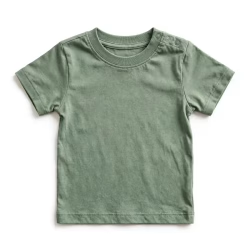
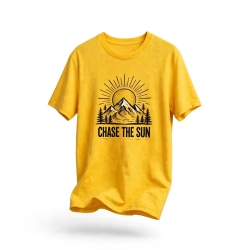
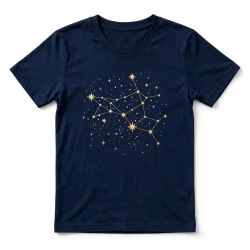
Custom Men’s T-Shirt Manufacturer in Bangladesh
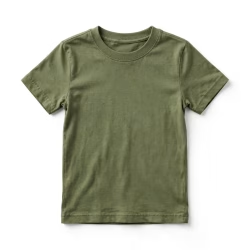
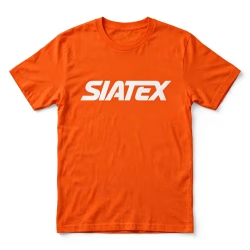
Siatex Apparel manufactures custom men’s T-shirts for apparel brands, retailers, importers, and wholesalers that need made-to-order production rather than ready-stock garments. Buyers can develop T-shirts around their own measurements, fabric specifications, colors, artwork, trims, labels, and packing instructions.
A basic T-shirt may look simple, but bulk production depends on getting many small details right. Fabric weight affects drape and feel. Neck rib dimensions influence how the collar sits after washing. Stitch type, seam allowance, shrinkage, printing placement, measurements, and finishing all need to match the approved specification.
We work from buyer requirements so the finished garment represents the intended brand and market. Companies developing broader knitwear ranges can also review our custom T-shirt manufacturing capabilities.
Men’s T-Shirts Made to Your Specifications
Private-label buyers rarely need the same T-shirt. A streetwear label may want an oversized heavyweight jersey tee, while a retailer may require a regular-fit crew neck in a lighter cotton jersey. Promotional apparel buyers can have different priorities again.
Custom development can cover details such as:
- Crew neck, V-neck, and other specified neck shapes
- Short or long sleeves
- Regular, slim, relaxed, or oversized fits
- Buyer-selected fabric composition and weight
- Custom body and sleeve measurements
- Solid or specified colors
- Screen printing or other approved artwork applications
- Embroidery where suitable for the design
- Main labels, size labels, and care labels
- Hangtags and barcode requirements
- Buyer-specified folding and packing
For buyers developing fashion-oriented silhouettes, our oversized T-shirt production page covers a closely related product category.
Fabric Selection for Custom Men’s T-Shirts
Fabric affects almost every part of a T-shirt, including comfort, appearance, print results, shrinkage, durability, and final cost. The right specification should therefore be decided before bulk cutting.
Cotton jersey is commonly associated with everyday casual T-shirts because it provides a familiar hand feel and works with many constructions. Blended fabrics can be considered when the product specification calls for different performance or handling characteristics.
GSM is another practical purchasing point. A lighter fabric creates a different garment from a heavier jersey even when both shirts use the same pattern. Buyers should provide their required composition and GSM rather than requesting only a “cotton T-shirt.”
The fabric brief should ideally state:
- Fiber composition
- Required GSM
- Knit construction
- Color or Pantone reference
- Required finishing
- Shrinkage expectations
- Performance requirements where applicable
Fabric selection also needs to suit the intended decoration. A graphic tee with a large front print may need different preparation from a plain retail basic. Buyers developing artwork-heavy collections can review our custom graphic T-shirt manufacturing page.
Pattern, Fit, and Size Development
Fit cannot be defined accurately with terms such as “regular” or “slim” alone. Two brands can use the same fit description while working with very different chest widths, body lengths, sleeve openings, shoulder measurements, and neck dimensions.
A measurement chart gives production teams a clear technical reference. It also establishes tolerances that can be checked during sampling and bulk inspection.
For a men’s T-shirt order, buyers should provide measurements such as chest width, body length, shoulder width, sleeve length, sleeve opening, neck width, and neck drop where relevant. The exact points of measurement depend on the style.
A reference garment can also be useful when the required fit is difficult to communicate through photographs alone.
Brands developing alternative neckline options may consider custom V-neck T-shirts as part of the same men’s basics program.
Private Label Men’s T-Shirt Production
Private-label production allows the garment to be developed around the buyer’s brand rather than a factory stock specification.
Branding details should be confirmed before production. These may include a woven main label, printed neck branding, size identification, care information, hangtags, stickers, barcodes, and packaging instructions.
Artwork files also need clear placement information. Simply sending a logo does not tell the production team how large it should be or where it belongs on the garment.
A useful artwork specification states the required dimensions and placement from fixed reference points. Colors should also be identified clearly when accurate reproduction matters.
This reduces interpretation during sample development and gives the buyer something specific to approve.
Sampling Before Bulk T-Shirt Production
A development sample lets the buyer review the garment before bulk manufacturing moves forward.
The sample should be checked against the agreed specification rather than judged only by appearance. Buyers can review measurements, fit, fabric feel, neckline shape, sewing construction, artwork position, label placement, and general finishing.
Comments should be specific. For example, “increase body length by 1.5 cm” gives the pattern team useful information. “Make it slightly longer” leaves room for different interpretations.
Revisions may be needed when measurements, construction, artwork, or trims change. The approved specification then becomes an important reference for bulk production.
From Fabric to Finished T-Shirt
Once the required specifications and approvals are in place, bulk T-shirt manufacturing moves through a series of connected operations.
Fabric is prepared according to the order requirements before cutting. Pattern pieces are laid out and cut for the required size breakdown. Sewing then joins the garment components according to the approved construction.
The neckline deserves particular attention on a crew-neck T-shirt. Rib dimensions, attachment, stretch, and stitching influence both appearance and wear.
Decoration is handled according to the approved artwork and production sequence. Labels and other trims are attached in their specified positions. Garments then move through finishing, inspection, folding, and packing.
This sequence sounds straightforward. In practice, consistency across thousands of pieces depends on controlling the approved measurements and construction throughout production.
Quality Checks for Bulk Men’s T-Shirt Orders
Quality control should start before the cartons are closed.
During manufacturing, measurements and workmanship can be checked against approved requirements. Sewing inspection may cover skipped stitches, open seams, puckering, uneven construction, incorrect label attachment, and visible workmanship defects.
For printed garments, artwork placement and appearance also need checking. Finished pieces can then be inspected before packing according to the applicable order requirements.
A useful quality specification gives the manufacturer measurable standards. Buyers should clearly identify measurement tolerances, critical construction details, artwork requirements, packing instructions, and any testing or inspection requirements connected with the order.
Men’s T-Shirt Manufacturing for USA Brands
US apparel brands source men’s tees for basics programs, private labels, streetwear collections, promotional lines, and retail ranges. Each program can require a different fit, fabric weight, decoration method, and packaging format.
US buyers should send the complete product specification when requesting costing. Quantity by color and size is particularly important because order structure affects material planning and production.
For brands building coordinated casualwear programs, T-shirts can also be sourced alongside custom sweatshirts using buyer-defined specifications.
T-Shirt Supply for German and European Buyers
European buyers often work with detailed technical files covering construction, measurements, labeling, packing, and product requirements. A clear tech pack makes development easier because the same information can be followed during sampling, production, and inspection.
Siatex Apparel can work with sourcing requirements from clothing businesses serving markets such as Germany, Spain, France, Italy, the Netherlands, Portugal, Belgium, Poland, and the Czech Republic.
Rather than putting every European market into the product specification, buyers should focus on the requirements of the particular sales program. A German retailer, for example, may have different sizing, packaging, labeling, and testing instructions from a Spanish fashion brand.
Men’s T-Shirt Production for UK Buyers
UK brands, wholesalers, and retailers sourcing custom T-shirts can develop products around their own size charts and branding requirements.
The purchasing brief should identify whether the style is a retail basic, fashion tee, promotional garment, work-related product, or another type of program. That context helps define suitable fabric, fit, construction, and decoration requirements.
Buyers expanding a casualwear assortment beyond tees may also consider custom polo shirt manufacturing for coordinated private-label programs.
Custom T-Shirts for Canadian Apparel Buyers
Canadian importers and clothing brands can source made-to-order men’s T-shirts using their own specifications rather than choosing from pre-designed stock.
For an accurate production discussion, the inquiry should include more than a product photograph. Fabric composition, GSM, measurements, artwork, order quantities, colors, labels, and packaging requirements give the manufacturing team a much clearer picture of the intended garment.
Season also matters. A lightweight summer tee and a heavier casual T-shirt may share the same basic shape but require different fabrics and construction decisions.
What to Send for a T-Shirt Quotation
A detailed inquiry saves time during costing and development.
Send as much of the following information as possible:
- Tech pack or technical drawing
- Fabric composition and GSM
- Required fit and measurement chart
- Size breakdown
- Quantity per color
- Color references
- Print or embroidery artwork
- Label specifications
- Trim details
- Packing instructions
- Reference garment or clear product images where useful
- Required delivery destination
If some technical details are still under development, identify them clearly instead of leaving the manufacturer to assume the specification.
Source Men’s T-Shirts Directly from Siatex Apparel
Brands and apparel buyers looking for custom production can send Siatex Apparel their T-shirt design, tech pack, fabric specification, measurement chart, quantities, artwork, and packing requirements for review.
The goal is straightforward: establish the garment specification first, confirm the development details, and then manufacture against the approved requirements.
For buyers planning a broader casualwear collection, custom hoodie manufacturing can complement men’s T-shirt programs with another made-to-order knitwear category.
Frequently Asked Questions
Does Siatex Apparel manufacture custom men’s T-shirts?
Siatex Apparel works with made-to-order apparel requirements for B2B buyers. Men’s T-shirt development can be based on the buyer’s design, measurements, fabric specification, colors, branding, artwork, and packing requirements.
Can I order private-label men’s T-shirts?
Private-label projects can be developed around buyer-supplied branding specifications. Provide the required labels, artwork, hangtag information, packaging details, and technical product requirements with the inquiry.
What information is needed to get a T-shirt price?
Send the fabric composition, GSM, style details, measurements, quantities by color, size range, artwork, trims, labeling, and packaging requirements. A tech pack or reference sample makes the costing request clearer.
Can the fit and measurements be customized?
The product can be developed according to the approved measurement specification. Buyers should provide a size chart showing the required points of measurement and tolerances.
Can men’s T-shirts include custom printing?
Artwork requirements should be supplied with dimensions, placement information, colors, and relevant technical details. The appropriate decoration method depends on the design, fabric, and order specification.
Do you manufacture T-shirts for wholesale orders?
Siatex Apparel focuses on B2B garment manufacturing for buyers such as apparel brands, importers, retailers, and wholesalers. Order requirements should be submitted with the required quantities and complete product specifications.
Can buyers request samples before bulk manufacturing?
Sampling is an important stage for checking measurements, fit, construction, fabric, branding, artwork placement, and finishing before the approved specification moves into bulk production.
Do you supply men’s T-shirts to international buyers?
The page is intended for apparel buyers sourcing for markets including the USA, UK, Canada, Germany, Spain, France, Italy, the Netherlands, Portugal, Belgium, Poland, and the Czech Republic. Individual order feasibility depends on the product and commercial requirements.